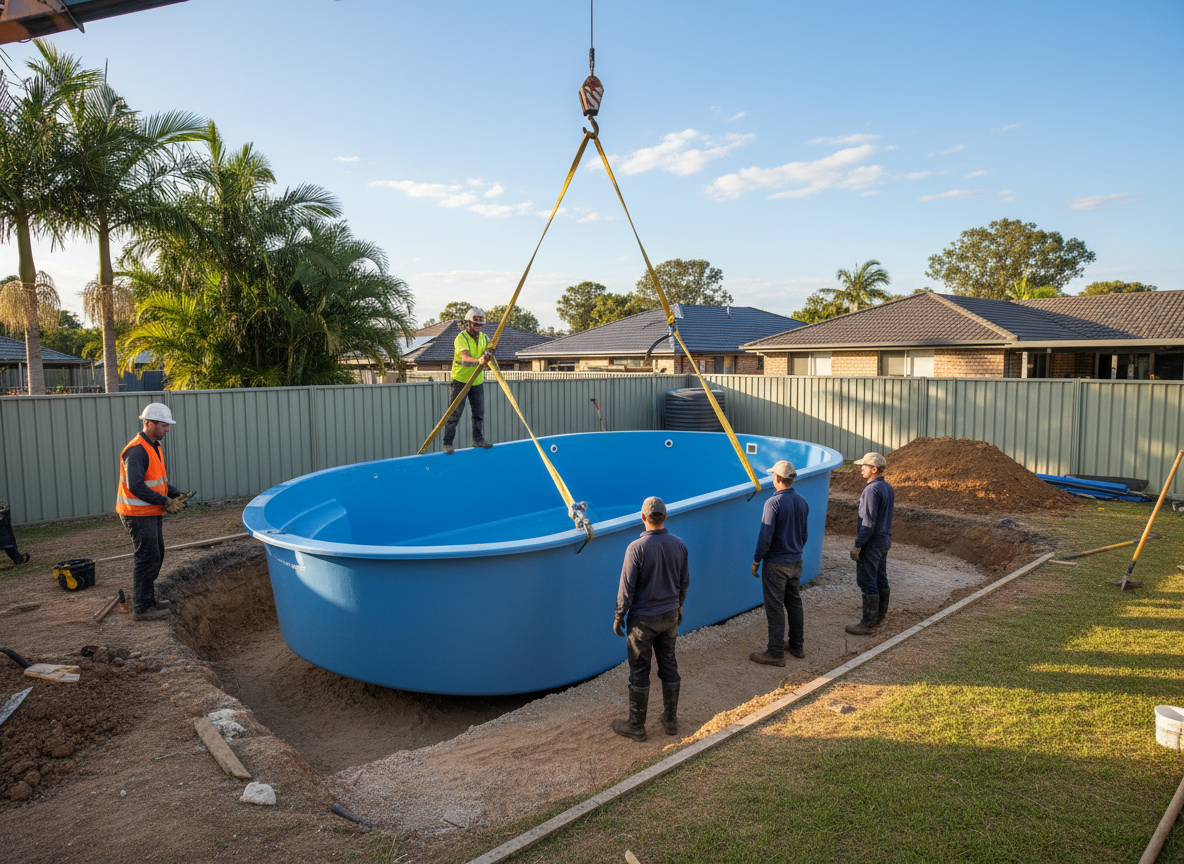
Fibreglass pools are pre-moulded shells manufactured off-site and then transported and installed into an excavated area. This method often results in a faster installation compared to concrete pools. The smooth, non-porous surface of a fibreglass pool can be easier to clean and is less prone to algae growth. They are a popular choice for many Brisbane homeowners looking for a straightforward pool solution. Understanding the installation process, from initial design to the final pool safety certificate, helps ensure your project runs smoothly and meets all Queensland regulations.
The build process for a fibreglass pool typically begins with site preparation and excavation. Once the hole is ready, the fibreglass shell is delivered and carefully lowered into place. This stage requires precise coordination and often a crane, depending on site access. Plumbing and filtration systems are then connected, followed by backfilling around the shell. The final steps involve pouring the surrounding concrete beam, installing coping, and arranging the fencing. The overall timeline can vary, but many fibreglass pool installations in Brisbane can be completed within a few weeks once approvals are in place.
Several factors influence the cost of a fibreglass pool installation. The size and shape of the pool shell are primary considerations, as are any additional features like spa jets or water features. Site conditions in Brisbane play a significant role; challenging access, a sloping block, or difficult soil types like rock or clay will increase excavation costs. Properties in areas like Ashgrove or The Gap, which are part of the Enoggera Creek flood alert area, or those in the Cubberla Creek catchment, might require specific engineering or drainage solutions that add to the overall expense. Council approval for both the pool and fencing is mandatory, and planning approval may be needed if your property is within a specific zone or overlay, such as a flood or heritage overlay.
When planning your fibreglass pool, it's important to consider potential challenges. Poor site access in older Brisbane suburbs can make shell delivery and excavation more complex. For instance, homes near the Ithaca Creek stone embankment in Ashgrove might have historical flood-prone areas requiring extra attention. Also, remember that a pool safety certificate is required before the pool can be filled and used. Ensure your chosen builder is licensed and understands all Brisbane City Council requirements and Australian Standard AS 1926 for pool fencing. Overlooking these details can lead to delays and additional costs.
Technician insight
In Brisbane, the thing that catches most people out with fibreglass pool installation is often the site access, especially in older, established suburbs like Camp Hill or Coorparoo where properties might have narrow side access or established gardens. Getting a large fibreglass shell into a tight backyard can significantly impact the installation method and overall cost, sometimes requiring a larger crane or more complex logistics.
Fibreglass Pool on a Sloping Block in Kenmore
A homeowner in Kenmore wanted a fibreglass plunge pool on a moderately sloping block. The challenge was ensuring a stable foundation and managing stormwater runoff, as the property was within the Cubberla Creek catchment. The builder designed a stepped retaining wall solution to create a level pad for the pool, integrating drainage to manage water flow away from the structure. This approach allowed for the efficient installation of the fibreglass shell, providing a stable and compliant pool area despite the natural slope.
Fibreglass Pool Installation Services We Offer
✓Small Backyard Fibreglass Pools
These compact fibreglass pools are designed for properties with limited space, offering a refreshing dip without dominating the yard.
✓Plunge Fibreglass Pools
A popular choice for relaxation and cooling off, plunge pools are smaller and deeper, fitting well into many Brisbane backyards.
✓Fibreglass Lap Pools
Long and narrow, these fibreglass pools are ideal for exercise and can be integrated into designs for properties with linear layouts.
✓Fibreglass Pool and Spa Combinations
Integrating a spa section into a fibreglass pool shell offers both swimming and hydrotherapy options in one compact unit.
✓Custom Fibreglass Pool Shapes
While fibreglass pools come in pre-determined moulds, some builders offer a range of unique shapes and sizes to better suit individual site requirements.
✓Fibreglass Pool Renovation
This involves resurfacing or updating an existing fibreglass pool, which can extend its life and refresh its appearance.
How it works
- 1
Site Assessment and Design
A licensed pool builder will inspect your Brisbane property to assess site access, soil conditions, and any potential challenges like slopes or easements. They will discuss fibreglass pool shell options, placement, and design elements to suit your backyard and lifestyle.
- 2
Council Approvals and Excavation
Your builder will manage the necessary Brisbane City Council building approval for the pool and fencing. If required, planning approval for specific overlays will also be sought. Once approvals are granted, excavation of the pool area begins, preparing the site for the fibreglass shell.
- 3
Shell Installation and Plumbing
The pre-fabricated fibreglass pool shell is delivered and carefully lowered into the excavated hole. Precise levelling and positioning are crucial at this stage. Plumbing lines for filtration and any water features are connected, and the area around the shell is backfilled.
- 4
Coping, Fencing, and Handover
The concrete beam around the pool's edge is poured, and coping is installed. Pool fencing, compliant with Australian Standard AS 1926, is erected. Once all safety measures are in place and inspected, a pool safety certificate is issued, and your new fibreglass pool is ready to enjoy.
Pricing
Fibreglass pool installation costs in Brisbane typically range from $35,000 to $65,000, depending on size, site conditions, and features. Every job is priced case by case after a site inspection.